Yearly Archives: 2025

SIMOC Live active in 8 habitats across 4 continents
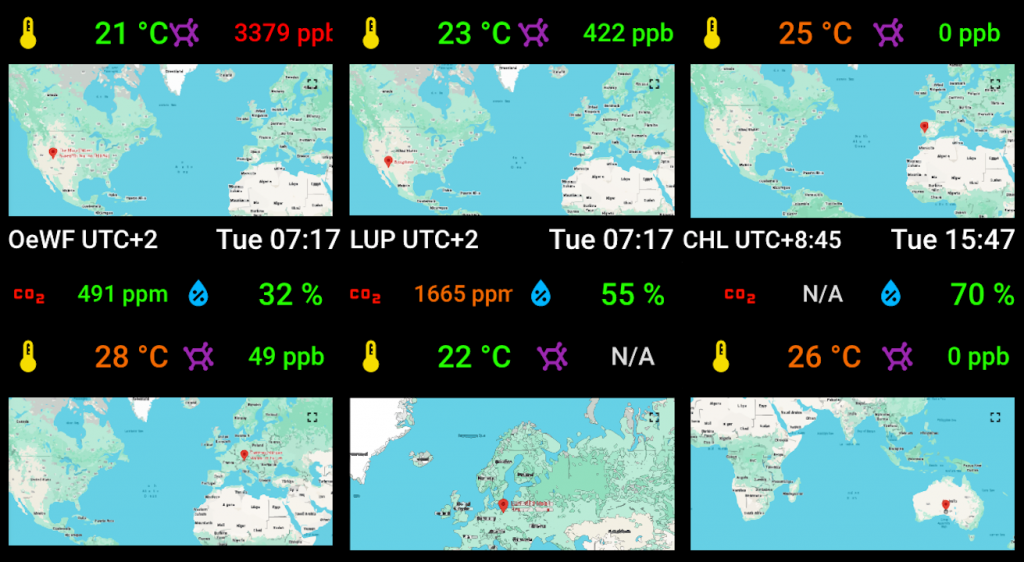
SIMOC Live dashboard for the World's Biggest Analog 2025

Born of the Analog Astronaut Community, the World’s Biggest Analog (WBA) is a volunteer-based, two weeks mission in which 16 Moon and Mars habitats across 5 continents will attempt the largest synchronized analog mission ever attempted.

SAM Director of Research Kai Staats brought SIMOC Live to the WBA as one of the proposed science projects. SIMOC Live is a real-time air quality monitoring extension to the SIMOC agent-based model and educational web interface. Once accepted in 2024, the all-volunteer SIMOC team composed of Ezio Melotti, Franco Carbognani, and Shantanu Parmar worked to prepare a fully revised Raspberry Pi image and semi-automated configuration that enables each sensor array, no matter its location on Earth, to direct its data stream to a central repository on server. The Mission Control Center hosted by the Austrian Space Forum is then able to monitor the air quality for all of the habitats on a single computer monitor.

One or more SIMOC Live sensor arrays was shipped to eight habitats on four continents such that a live data broadcast is now providing a single-screen monitor in the Austrian Space Forum’s Mission Control Center. As such, the air quality of each represented habitat is presented in real-time.
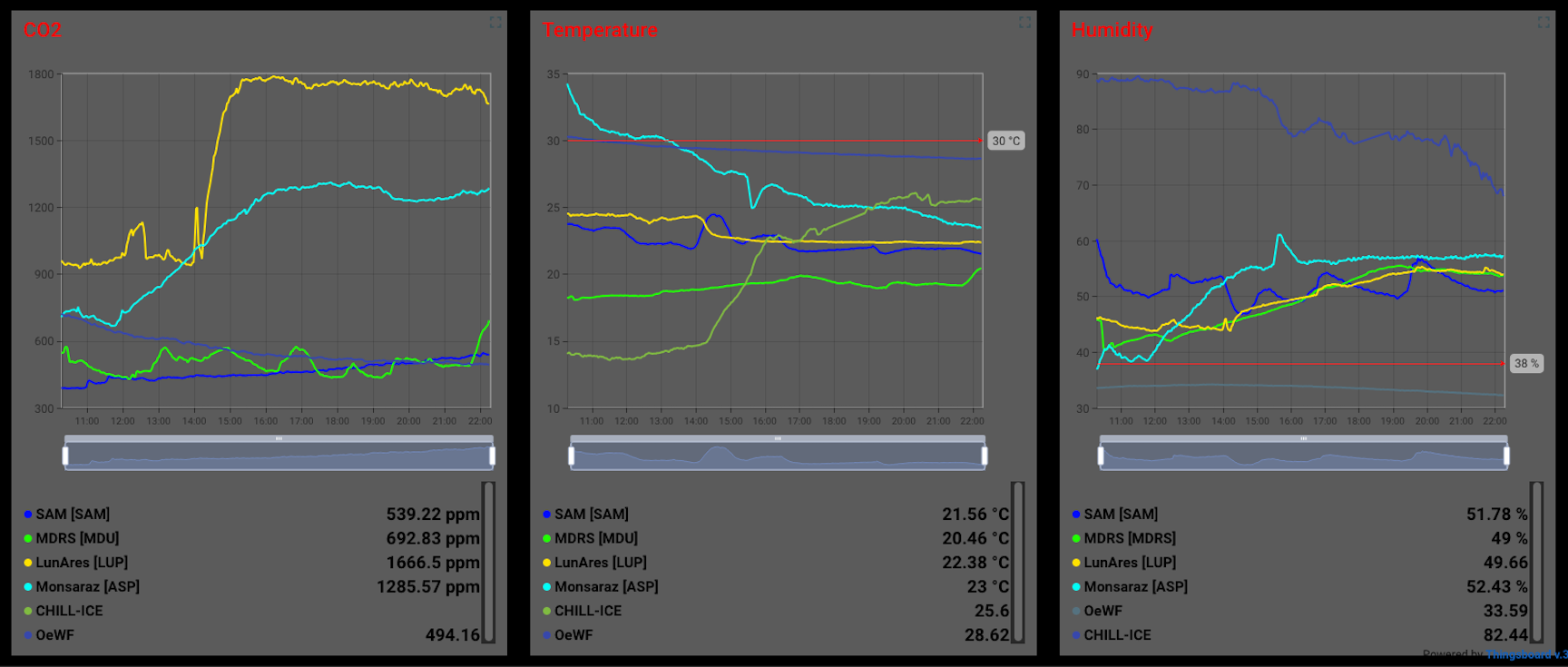
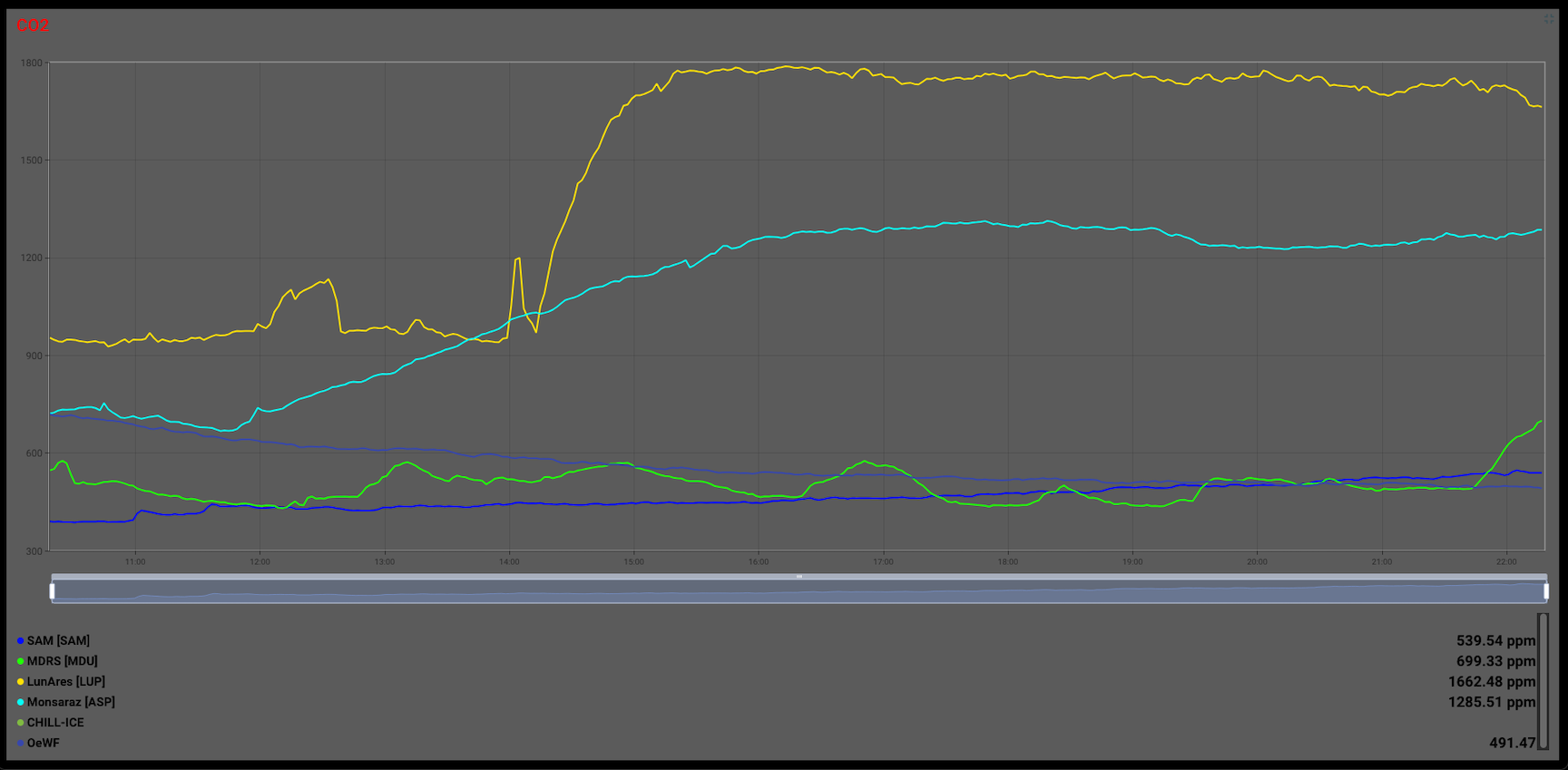
SIMOC Live dashboard for the World's Biggest Analog 2025 SIMOC Live dashboard for the World's Biggest Analog 2025

By |2025-10-13T22:42:17-07:00October 13th, 2025|Categories: Research & Development|0 Comments

SIMOC papers presented at ICES 2025

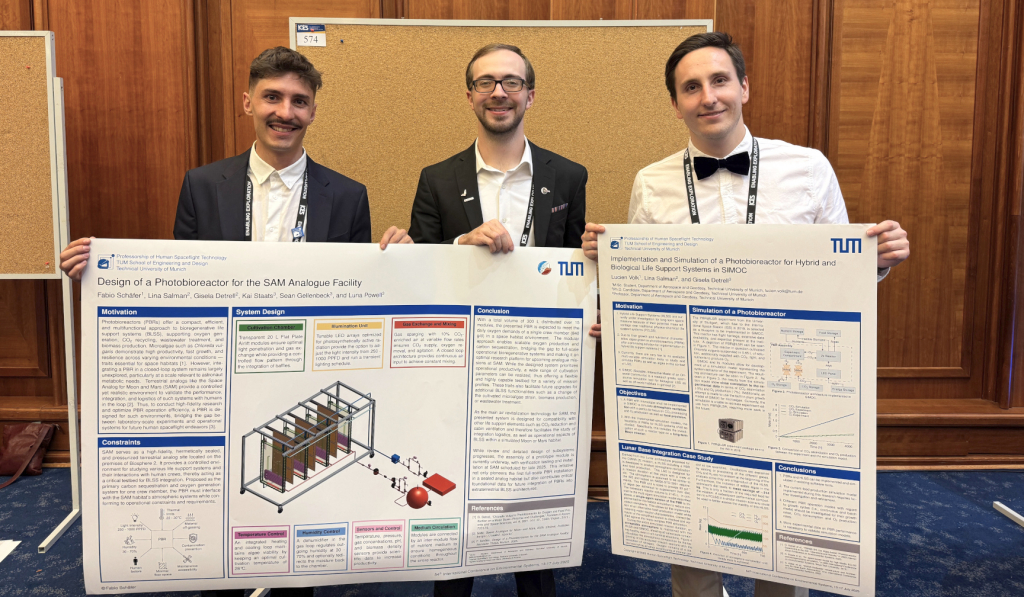
Fabio, Griffin, and Lucien at ICES 2025 with a poster about SIMOC-based research

The International Conference on Environmental Systems (ICES) in Prague offered a great platform to showcase recent achievements in SIMOC and SAM. Griffin Hentzen presented a paper written by Dr. James Knox, NASA veteran, who with the SAM team is designing an advanced CO2 scrubber for integration into the new SAM Experimental Air Revitalization Laborator (EARL), currently in construction. This scrubber will close the air quality management loop in the Environmental Control and Life Support System (ECLSS) of SAM, further increasing mission fidelity during analog inclusions.

Griffin also presented a paper on behalf of Dr. Cameron Smith on the first prototype of a portable, pressurized, emergency shelter for deployment on Mars.

SAM has since the spring of 2024 been working with the Technical University of Munich (TUM), Germany, under Dr. Gisela Detrell, where graduate student Fabio Schäfer is designing a large scale photobioreactor to be installed in the new SAM EARL facility. Fabio presented a poster on how this system will support future bioregenerative atmosphere revitalization research. This project is the first to implement a photobioreactor (algae-based CO2 sequestration) of this scale in an analog facility, opening a multitude of opportunities and research questions to be studied at SAM.

Also from TUM, Lucien Volk shared his progress on a photobioreactor simulation model built in SIMOC. The capability to simulate realistic photobioreactor behavior is important to design robust hybrid and bioregenerative life support systems for future missions to space. This previous article shares details about his work.

As always, ICES was a great opportunity for the SIMOC-SAM and TUM working groups to gather and connect with the greater ECLSS community.

Visit the SIMOC and SAM Publications page to learn more …

By |2025-08-28T18:03:47-07:00July 17th, 2025|Categories: Publications|0 Comments

ASU’s Interplanetary Initiative features SIMOC

SIMOC at ASU II

Arizona State University’s Interplanetary Initiative, the same that supported the launch of SIMOC in 2017-18, is featuring SIMOC is a new interactive, educational “BIG IDEAS” question “How will the first humans on Mars work together to survive?”

Enjoy the three featured segments, “How can we sustain healthy communities on Mars?”, “Why we can’t stop dreaming about the Red Planet”, and “Can your students build a model for off-planet survival?”

Learn more …

By |2025-05-15T23:55:31-07:00May 15th, 2025|Categories: In the news|0 Comments

Microalgae and Photobioreactors for SIMOC

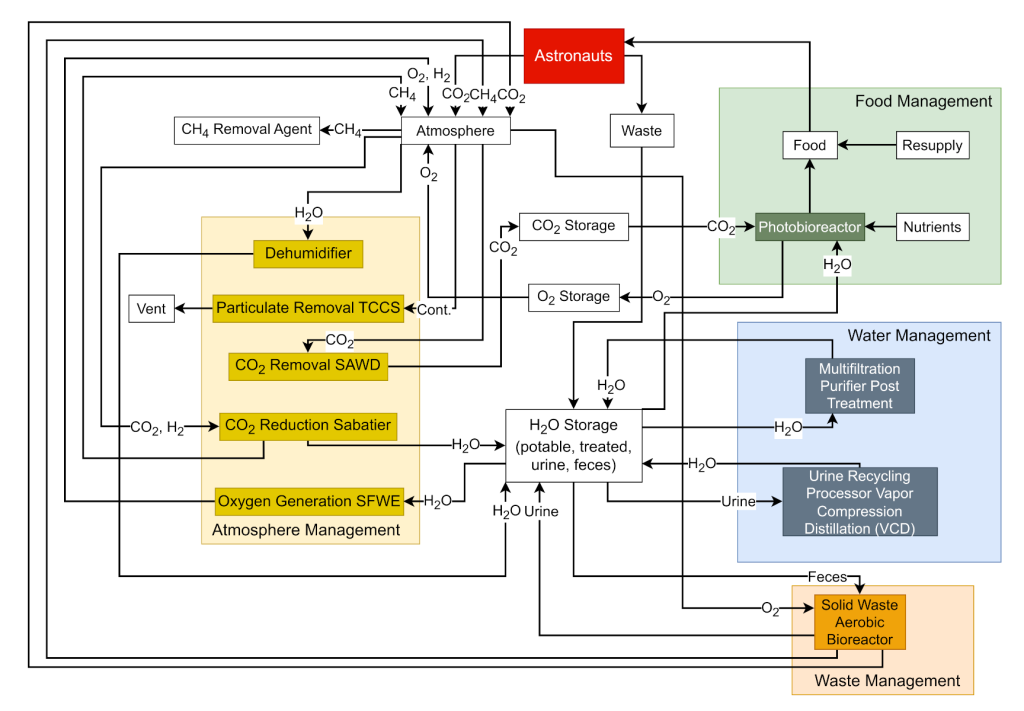
A mass flow diagram, Lucien Volk, TUM, Germany
Figure: Proposed ECLSS concept for DIANA, adapted for simulation in SIMOC.

Microalgae and Photobioreactors for SIMOC
by Lucien Volk, Masters student candidate
Technical University at Munich (TUM), Munich, Germany

Future space exploration missions aim to venture to the Moon, Mars and beyond. It is the current consensus in the ECLSS community, that these long durations missions will require hybrid and biological life support systems for these missions to be realistically feasible. Microalgae grown in photobioreactors seems to be a promising component part of these necessary life support system architectures since they can absorb the CO2 human’s breath out while producing the vital O2. Additionally, they can potentially provide several other services such as food production and wastewater treatment. The goal of the research performed at the Technical University of Munich (TUM) was to implement a microalgae photobioreactor in SIMOC to enhance its capabilities and study the impact of photobioreactors on a life support system architecture.

The photobioreactor implemented was based on the research work performed under the “PBR@LSR” project at the University of Stuttgart [1]. SIMOC was able to reproduce the gas characteristics observed in the experiment. With regards to food production, the research at TUM concluded that a microalgae photobioreactor operated in a semi-continuous mode (algae is grown continuously and only partially harvested) is likely to produce more biomass than a photobioreactor operated in batch mode (algae is fully harvested every cycle). However, required photobioreactor volume heavily depends on whether CO2 is absorbed, O2 produced, or food provided and can be up to 500L per person. Therefore, a microalgae photobioreactor is often geared towards a specific task.
Finally, the microalgae photobioreactor was implemented as part of a proposed Moon base, specifically the base concept “DIANA” of Astraeus e.V. [2]. Here, SIMOC revealed that a photobioreactor could contribute to a stable ECLSS system providing 30g/d of food per crewmember, producing parts of the necessary O2 and processing parts of the CO2. While it was shown that microalgae photobioreactors could be implemented in SIMOC, several improvements must be made to said model to be more precise and usable before it can become an official component in SIMOC.

The research work performed with regards to microalgae photobioreactors and SIMOC will be presented as a poster at ICES 2025, pending approval of the abstract.

Sources
[1] H. Helisch et al., “High density long-term cultivation of Chlorella vulgaris SAG 211-12 in a novel microgravity-capable membrane raceway photobioreactor for future bioregenerative life support in SPACE,” Life Science in Space Research, pp. 91–107, 2019, ISSN: 2214-5524. DOI: https://doi.org/10.1016/j.lssr.2019.08.001.

[2] D. Acker et al., “DIANA-Dedicated Infrastructure and Architecture for Near-Earth Astronautics,” 51st International Conference on Environmental Systems, 2022.

By |2025-08-28T18:03:16-07:00April 1st, 2025|Categories: Education|0 Comments
Go to Top